Affordability · 7 min read
How much mortgage can I actually afford?
The stress test explained in plain English — why you are qualified at a rate you will not pay, what it costs you in buying power, and how to work with it.
There are two answers to this question and they are rarely the same number. There is what a lender will approve you for, and there is what you can carry without resenting your own house. My job is to show you both and let you pick.
What the stress test actually does
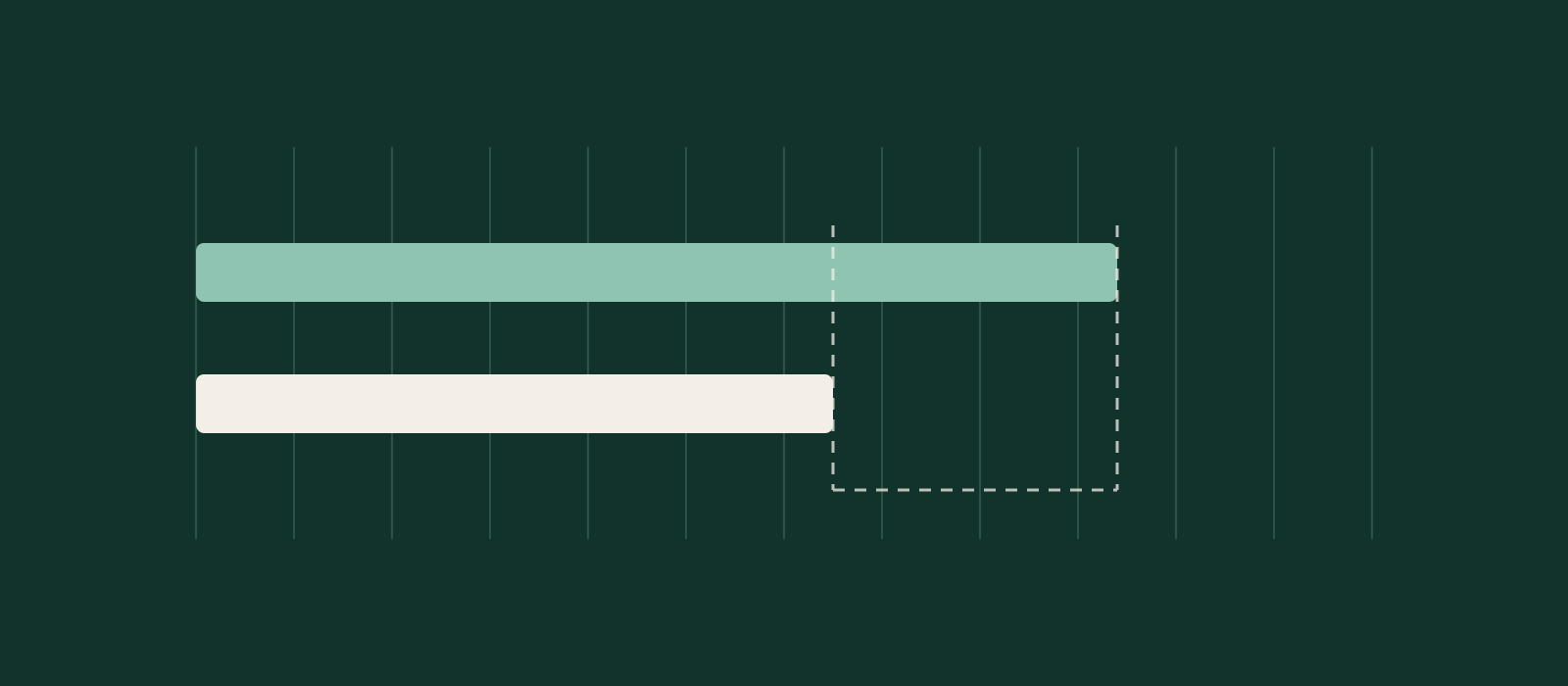
Every federally regulated lender in Canada has to qualify you at the higher of two numbers: your contract rate plus two percent, or the 5.25% benchmark. You make payments at your real rate. You are approved as though you were paying the higher one.
The two ratios behind your number
Lenders measure your monthly obligations against your gross monthly income using two ratios. Both have to pass.
- GDS — Gross Debt Service, usually capped near 39%. Mortgage principal and interest at the qualifying rate, property taxes, heat, and half of any condo fees.
- TDS — Total Debt Service, usually capped near 44%. Everything in GDS plus every other monthly payment: car loans and leases, credit card minimums, line-of-credit payments, student loans, support payments.
Whichever ratio runs out first is your ceiling. For most people with a car payment, it is TDS.
What moves the number most
- Clearing a car payment. A $600 lease payment costs roughly $95,000 of mortgage at today's qualifying rates. Paying it out is almost always the single highest-leverage move.
- Down payment size. Below 20% down your mortgage must be insured, which caps amortization and adds a premium — but it also opens the lowest rate tiers. Bigger is not automatically better.
- Amortization. Stretching from 25 to 30 years lowers the qualifying payment and raises the ceiling. Insured 30-year amortizations are available to first-time buyers and to anyone buying a newly built home.
- How your income is documented. Salary is easy. Bonus, commission, overtime, and self-employment income usually need a two-year average, and part-time or probationary income may not count at all.
The minimum down payment rules
- 5% on the first $500,000 of purchase price.
- 10% on the portion between $500,000 and $1.5 million.
- 20% on any home priced above $1.5 million — no insurance available, so no exceptions.
What to do with this
Run the affordability calculator on this site to get a defensible ballpark, then send me the file. The calculator uses standard ratios and a 25-year amortization; a real approval looks at your actual income mix, your credit profile, and which lender fits. The gap between the two is often worth six figures — in either direction.
General information only, not financial advice, and not an offer of credit. Figures and program limits are current at the time of writing and do change — confirm the details that apply to your file with me before you act on them.
Back to all guides